Kejriwal Withdraws from Delhi High Court Proceedings in CBI Excise Policy Case
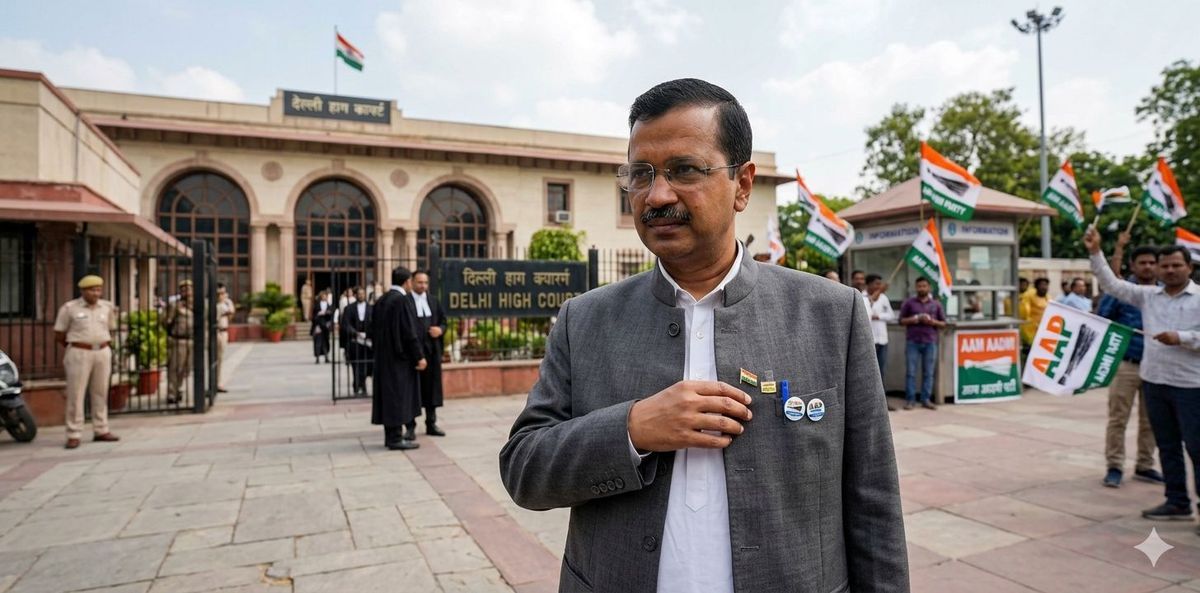
Cause Title: Arvind Kejriwal vs. Central Bureau of Investigation
Background
Arvind Kejriwal, the national convenor of the Aam Aadmi Party, has formally communicated to the Delhi High Court his decision to abstain from further participation in proceedings arising out of the Central Bureau of Investigation’s excise policy case, currently pending before a single-judge Bench.
The matter pertains to criminal revision petitions instituted by the CBI assailing a trial court order that had discharged Kejriwal, Manish Sisodia, Sanjay Singh, and other accused persons in the alleged excise policy irregularities case.
Court's Observation
Kejriwal had earlier moved an application seeking the recusal of Justice Swarna Kanta Sharma, invoking the doctrine of reasonable apprehension of bias. The grounds urged included prior adverse judicial observations, the judge’s participation in events linked to the Rashtriya Swayamsevak Sangh affiliated Akhil Bharatiya Adhivakta Parishad, and the empanelment of her children as government counsel.
The recusal application, however, was rejected, with the Court electing to proceed with the matter. In response, Kejriwal, in his letter, expressed reservations regarding the tenor of the order, contending that his plea had been construed as a personal imputation against the Court.
Decision
Kejriwal has decided to withdraw from the proceedings, citing a “loss of institutional confidence” in the fairness of the adjudicatory process. He invoked the cardinal principle of natural justice that justice must not only be done but must also manifestly appear to be done, asserting that the present proceedings, in his assessment, fall short of that constitutional standard.
Key Points
- Kejriwal has withdrawn from the Delhi High Court proceedings in the CBI excise policy case.
- The decision is based on a “loss of institutional confidence” in the fairness of the adjudicatory process.
- Kejriwal had earlier moved an application seeking the recusal of Justice Swarna Kanta Sharma, invoking the doctrine of reasonable apprehension of bias.
- The recusal application was rejected, with the Court electing to proceed with the matter.
Significance
Kejriwal’s decision to withdraw from the proceedings is significant, as it highlights the importance of ensuring the appearance of judicial impartiality in the administration of justice. The case also underscores the need for the judiciary to be mindful of the perception of bias and to take steps to address concerns raised by litigants.